


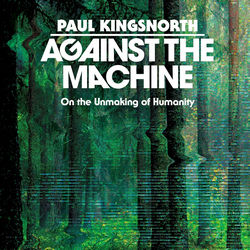
At most turns in this book, I was happy to write off this thesis as the musings of a crackpot. Kingsnorth’s foray into trans-related issues and his defense of conspiracies is just stupid. The assertion that progress wants the end of us is unnecessarily extreme. His holding on so much to religion and the idea that religion and science are somehow in opposition. There were times along the path of reading this that I’d wanted to put the book down and stop. Folks like this that are also Luddites often aren’t worth hearing out and don’t have a way to maintain credibility for 366 pages like Against the Machine demands.
This is all just more fear of new technology that has been in style since new technology. The stories are novel and not hard to find. One great one was how bicycles were immoral. One can never forget that pictures will steal your soul1. And I suggest you check out the incredible 1980s movie Maximum Overdrive for peak fear-of-machines.
But I took a deep breath and kept reading. Hard books can be worth sticking it out.
There is the final salvo, which is for people to become what Paul calls the “reactionary resistance.” It’s a wishy-washy amalgam of an ideology or non-ideology or something that is ‘green,’ while being anti-State power whilst building a moral centre where the state can reach you. At least Kingsnorth has a sense of humour for how loopy this all sounds.
Something did sit with me while reading this, however. This growing distrust, disinterest and disgust for the systems we live in; his “Machine,” as he calls it. Kingsnorth seems to rail the most at “The West,” but it’s as if this is the only space that exists in his Matrix2. There seems to be no South America, no Europe, and no other place that the machine hasn’t fully compromised. To him, progress has overtaken all and there’s no chance anyone could be unless they live “Outside the machine the better to see God and experience creation.”
Tugging at my brain though, is that Kingsnorth is on to something. He might be barking up the wrong tree, but perhaps barking in the right direction. The rejection of how our lives have become systematized and digitized has some merit to it. The almighty God of growth has a ton of problematic things about it too. I wish the author focused more on how can find new ways of living within or without the problematic parts of this system more than the same old “get’em from the inside” he describes in the “cooked” section. One feels that he’s grasping for the concept of community that should have been the focus and not the heavy-handed leanings on religion.
366 pages though. YMMV (Your mileage may vary).