We Need To Improve How We Sell "Smart" Properties
 As I was preparing to sell a property in Ontario, Canada, it was becoming very clear that our current housing sales stream was limited in the face of new technological advances. Selling a house with a ton of smart features seemed mostly lost on buyers, and when they picked up on what was there, agreements were not structured well to accommodate this. With respect to that agreement, the entirety of what counted as inclusions was in the “Chattels” section. For my sale, it looked like this:
All: electrical light fixtures, rods, blinds, window coverings. Gas furnace & equipment, central air conditioning, hot water tank (owned). Existing Appliances: stainless steel (S/S) fridge, S/S stove, S/S built in dishwasher, white washer and dryer, BBQ in backyard, central vacuum in garage, electronic car charger in garage, garage door opener & remote, all security cameras and accessories on property, doorbell camera.
In houses increasingly being defined by what’s in them, relying on this description (especially if an agent who writes this who is not tech savvy) - it is highly limited and a major disservice to buyers and sellers. In my house were a number of “smart” devices and they all needed to be either reset or placed ready into the hands new owners. Given that all of them needed to either be on the Internet or make use of a user account, this would be challenging when the sale occurs because the house would not longer be online. For me, all these devices become orphaned in my accounts if not cleanly removed. For the buyer, they have to rely on learning how to hard reset them. While that’s all a challenge, it seemed possible that they’d take over the house and not even know about some of these devices at all.
Cameras
The easiest things to handle were the cameras. I’d had a few Unifi cameras attached to a gateway device that I removed with the Internet connection. It was clear in the early days of listing the house that potential buyers were leery of being recorded. The most prudent first step was to buy a new Network Video Recorder (NVR), a Unifi Instant and migrate those cameras to this new NVR while removing the Internet connection (and making it clear to people who came to showings). This would create separation from my systems. Later, leading up to the sale, all that was needed to reset the cameras and then the console itself so everything was at factory settings. Once they had an Internet connection, they would just need to connect the NVR and start the console setup and adoption.
Apple Homekit
Operating on a larger level was an Apple Homekit “home” running on an Apple TV and a number of devices hooked into that. Additionally, an installation of Homebridge connected things like Unifi cameras to the Homekit ecosystem. Naturally, the majority of this setup left with me when moving from the house, but remnants still existed. All of the smart devices in the house were still hooked into the previous “Home,” so my removal of the home would not reset them. They’d all need to be reset and re-adopted, posing some challenges such as the smart switch near the front door. That had to be unscrewed from the wall and reset with a paper clip.
Garage Door Opener
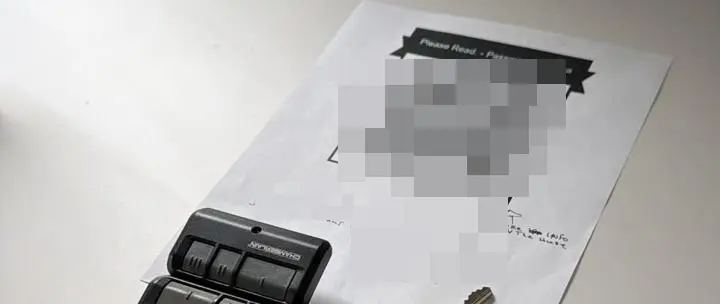
Along the way to enabling Homekit for different devices, the wireless garage door opener was a crucial piece of this. Having the ability to open the door in tools like Carplay was a major step in the home’s recent renovation (along with replacing the garage door itself). This involved getting a piece of hardware that would connect to the wireless network while also attaching to the Chamberlain door opener. Passing this to the new owners required a reset.
Entrance Doors
Each one of the doors in the house featured a smart lock capable entry by code, fingerprints (except the garage entry door), physical key and even Apple’s Home key featured. These locks add so much convenience to the house, especially when one makes use of something like an Apple Watch. But, they too had to be kept linked to the manufacturer’s site until after the Internet was cut. This essentially orphaned them, but kept the Apple home features working. Agents would enter with a physical key from a lockbox, but every time I went back, I could still use my iPhone as a key. None of these three smart locks were mentioned in the sales agreement as a chattel.
Appliances
The more common case is the refrigerator is a smart device, but in my home it was only the Stove, which was connected to the network and Internet. This was unlikely to be noticed or reset by the buyers given the limited utility and payoff for trying to understand the mechanics of getting it online. This was, again, something I needed to point out and highlight for the buyers.
Internal Networking
Also left out of the agreement and possibly even unknown to the buyer was the networking cable that was installed while the house was renovated. All rooms, the garage, and parts of the basement were outfitted with CAT6 cabling with flush-mount jacks on the wall. in addition, three pair of fibre optic cables were run from a room upstairs (presumably an office) to the basement. This includes a pass through patch panel, switch in the garage and an access point installed in the kitchen. None of this was listed in the chattels of the agreement either. Certainly removing any of it would be difficult, but it seems possible the buyers wouldn’t even know these details or how to make use of this.
In the end, I’d decided on creating a document that describes all the smart devices and how/where to use them so the new buyer was not in any doubt about what was installed. Modern sales agreements lack the kind of important specificity for new owners to take these tools and use them. I propose that a new section be created in the agreement for “Smart” features. Every existing device with the sale should be signalled and categorized including model numbers and other details so the homeowner is not in doubt about what they’re buying. As an added benefit, the inspector tasked with assessing the house’s fitness, could understand these features and report back.
There is nothing in our agreement or in the “schedule” attached to it that dictates I describe or assist the new buyer in managing any of these smart devices. That seems to be a real disservice to them. As the May 28th, 2026 closing date approached, I had to consider what I could do to help these buyers. The way this process is setup, it seems like no communication is the expected outcome. With the blessing of my agent, I created an entire page (even with a table of contents) that explains all of the installed devices, links to manuals, etc. I printed a QR code link to this page (with a quick note and the house keys) to try and help them hit the ground running with the house.